
Referenzprojekte
Establishing innovative fluid solutions for your geothermal, as well as oil & gas projects
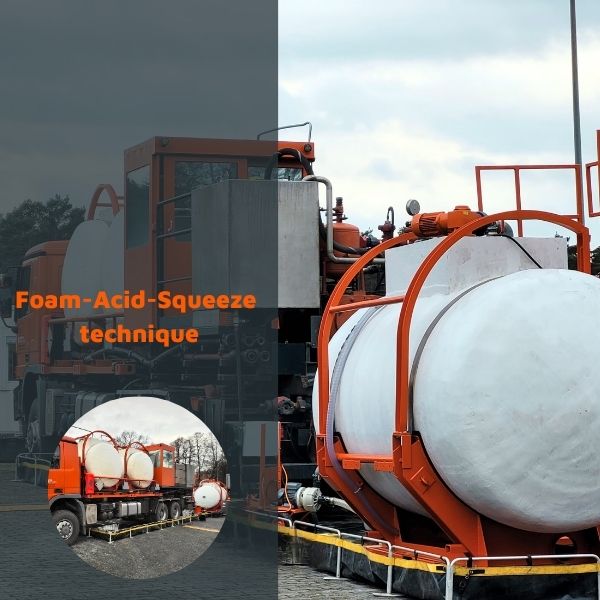
In close cooperation with our client, we performed an extended-reach scale
removal in a Rhät sandstone formation. Here, we effectively used a
combination of biodegradable acid systems for dissolving carbonates (e.g.
dolomite, calcite, etc.) and silicates (e.g. clay minerals, fines, etc.). For
acidizing geothermal and oil wells in the Upper Rhine Graben, this approach
has already led to excellent results.
By employing the well-established Foam-Acid-Squeeze technique, we
effectively treated and deliquefied this depleted waterflooded gas well.
(Feb., 2025)
removal in a Rhät sandstone formation. Here, we effectively used a
combination of biodegradable acid systems for dissolving carbonates (e.g.
dolomite, calcite, etc.) and silicates (e.g. clay minerals, fines, etc.). For
acidizing geothermal and oil wells in the Upper Rhine Graben, this approach
has already led to excellent results.
By employing the well-established Foam-Acid-Squeeze technique, we
effectively treated and deliquefied this depleted waterflooded gas well.
(Feb., 2025)
Combined Catch and Injection Tool (CCIT)
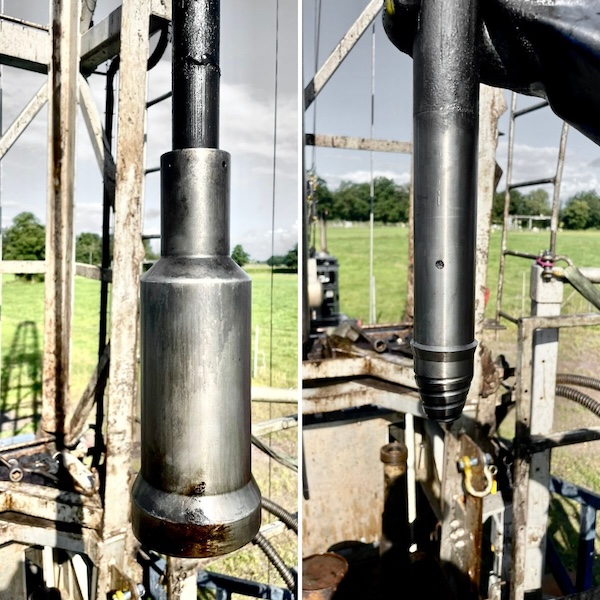
Proudly introducing the specially customized Combined Catch and Injection Tool (CCIT).
Our task:
1. Pump cleaning fluid for dissolving paraffine blockage below set production packer in oil well
2. Keep required expenditure as low as possible, thus excluding treatments via coil tubing and complex workover applications
Our challenge:
1. Torn GRE-tubing above production packer impedes pathway for commonly used downhole tools
2. Bottleneck in casing hinders effective removal of GRE-tubing prior to FES-treatment
Our solution:
In close collaboration with our client, the FES-tool experts planned, constructed, and optimized the fit-for-purpose Combined Catch and Injection Tool (CCIT). Customized FES-Downhole Tools: From design to successful application driven by your projects.
Our task:
1. Pump cleaning fluid for dissolving paraffine blockage below set production packer in oil well
2. Keep required expenditure as low as possible, thus excluding treatments via coil tubing and complex workover applications
Our challenge:
1. Torn GRE-tubing above production packer impedes pathway for commonly used downhole tools
2. Bottleneck in casing hinders effective removal of GRE-tubing prior to FES-treatment
Our solution:
In close collaboration with our client, the FES-tool experts planned, constructed, and optimized the fit-for-purpose Combined Catch and Injection Tool (CCIT). Customized FES-Downhole Tools: From design to successful application driven by your projects.
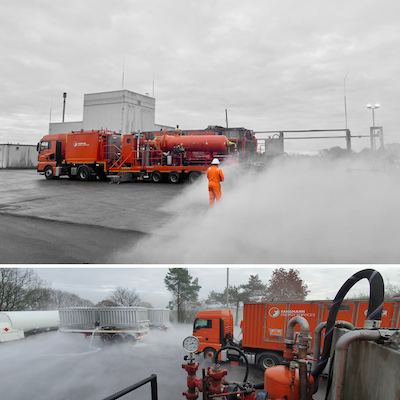
LNG-Einsatz mit Hochleistungskompressoren von FES
Erfolgreiche Entwässerung druckschwacher Gasbohrungen in Deutschland.
Druckschwache Gasbohrungen reichern häufig Formationswasser im bohrlochsnahen
Bereich an. Hierdurch kann eine reibungslose Förderung behindert und die resultierende
Gasrate herabgesetzt werden. Zur Behandlung dieser Blockaden werden routinemäßig
Schaumapplikationen durchgeführt. Durch den Einsatz von Tensiden wird hierbei die
Oberflächenspannung des Formationswassers reduziert und dessen Austrag erleichtert.
Die Eindringtiefe der eingesetzten Systeme und somit die Effektivität der jeweiligen
Applikation wird üblicherweise durch das eingebrachte Fluidvolumen bestimmt. Besonders
bei einer bereits verwässerten Bohrung sollte dieses jedoch stark limitiert werden, um ein
mögliches Erliegen der Gasproduktion zu vermeiden.
Durch den Einsatz mobiler Hochleistungskompressoren hat die Firma Fangmann Energy
Services das Konzept konventioneller Schaumbehandlungen revolutioniert und
perfektioniert. Bei einem sogenannten Foam-Squeeze dient Erdgas anstelle eines Wasser-
basierten Systems als Verdrängungs- und Verteilungsfluid für die jeweilige
Behandlungsflüssigkeit. Zusätzlich zu einer optimierten Eindringtiefe der Tensid-Lösung
hat diese Methode folgende Vorteile:
Das eingebrachte Erdgas reduziert die Dichte des angereicherten Formationswasser und
unterstützt somit dessen Rückförderung. Verpresste Fluidsysteme können
unterschiedlichste Zusammensetzungen aufweisen und demnach individuell einstellbare
Behandlungsziele verfolgen. Im Gegensatz zu Stickstoff wird beim Verpressen von Erdgas
die Qualität des anschließend geförderten Verkaufsgases nur marginal verändert. Daher
wird ein zeitaufwendiger Fackel-Einsatz nach einem Foam Squeeze nicht benötigt. Dies
beschleunigt deutlich die erneute Inbetriebnahme der behandelten Gasbohrung.
Dieses etablierte und tausendfach erprobte Verfahren haben wir kürzlich weiterentwickelt.
Sollte die zur Verfügung gestellte Gasquelle den gestellten Ansprüchen für einen
traditionellen Foam Squeeze nicht genügen, gibt es nun eine Alternative: Der Einsatz von
LNG statt Erdgas. Erst kürzlich haben wir diese Innovation mit sehr gutem Erfolg bei einem
unserer Kunden erproben und optimieren dürfen. Wir bedanken uns für das
entgegengebrachte Vertrauen und freuen uns auf zukünftige Projekte. Bei Klärungsbedarf
zu unseren Neuen Technologien, stehen wir Ihnen sehr gerne jederzeit zur Verfügung.
Druckschwache Gasbohrungen reichern häufig Formationswasser im bohrlochsnahen
Bereich an. Hierdurch kann eine reibungslose Förderung behindert und die resultierende
Gasrate herabgesetzt werden. Zur Behandlung dieser Blockaden werden routinemäßig
Schaumapplikationen durchgeführt. Durch den Einsatz von Tensiden wird hierbei die
Oberflächenspannung des Formationswassers reduziert und dessen Austrag erleichtert.
Die Eindringtiefe der eingesetzten Systeme und somit die Effektivität der jeweiligen
Applikation wird üblicherweise durch das eingebrachte Fluidvolumen bestimmt. Besonders
bei einer bereits verwässerten Bohrung sollte dieses jedoch stark limitiert werden, um ein
mögliches Erliegen der Gasproduktion zu vermeiden.
Durch den Einsatz mobiler Hochleistungskompressoren hat die Firma Fangmann Energy
Services das Konzept konventioneller Schaumbehandlungen revolutioniert und
perfektioniert. Bei einem sogenannten Foam-Squeeze dient Erdgas anstelle eines Wasser-
basierten Systems als Verdrängungs- und Verteilungsfluid für die jeweilige
Behandlungsflüssigkeit. Zusätzlich zu einer optimierten Eindringtiefe der Tensid-Lösung
hat diese Methode folgende Vorteile:
Das eingebrachte Erdgas reduziert die Dichte des angereicherten Formationswasser und
unterstützt somit dessen Rückförderung. Verpresste Fluidsysteme können
unterschiedlichste Zusammensetzungen aufweisen und demnach individuell einstellbare
Behandlungsziele verfolgen. Im Gegensatz zu Stickstoff wird beim Verpressen von Erdgas
die Qualität des anschließend geförderten Verkaufsgases nur marginal verändert. Daher
wird ein zeitaufwendiger Fackel-Einsatz nach einem Foam Squeeze nicht benötigt. Dies
beschleunigt deutlich die erneute Inbetriebnahme der behandelten Gasbohrung.
Dieses etablierte und tausendfach erprobte Verfahren haben wir kürzlich weiterentwickelt.
Sollte die zur Verfügung gestellte Gasquelle den gestellten Ansprüchen für einen
traditionellen Foam Squeeze nicht genügen, gibt es nun eine Alternative: Der Einsatz von
LNG statt Erdgas. Erst kürzlich haben wir diese Innovation mit sehr gutem Erfolg bei einem
unserer Kunden erproben und optimieren dürfen. Wir bedanken uns für das
entgegengebrachte Vertrauen und freuen uns auf zukünftige Projekte. Bei Klärungsbedarf
zu unseren Neuen Technologien, stehen wir Ihnen sehr gerne jederzeit zur Verfügung.
FES-Bulk plant extended
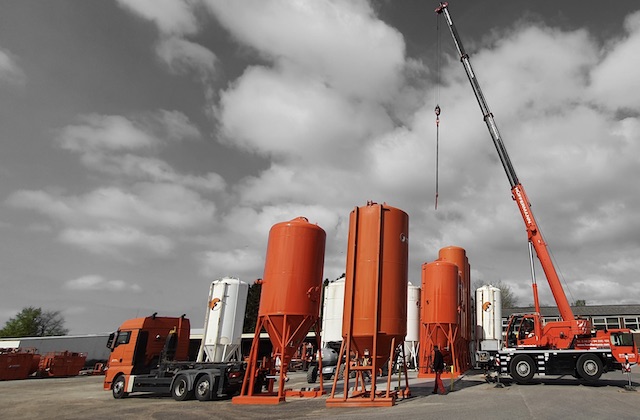
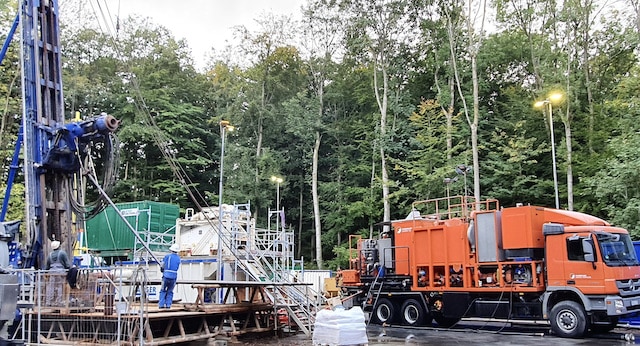
Encouraged by the quantity of cementing projects, Fangmann Energy Services extends its bulk plant to a total of 700 tons storage capacity. Furthermore, reacting on an increased demand for special cement blends, we modernized our blending facilities. Due to the close proximity to the FES-lab, these specially customized dry mixtures can immediately be evaluated. Thus, quality control and necessary adjustments are feasible on a short-notice notice: A huge advantage for us and our customers.
Magnesium oxychloride cement for plug & abondonment
Magnesium oxychloride cement (MOC), also known as Sorel cement, is based on the aqueous reaction between magnesium chloride (MgCl2) and magnesium oxide (MgO).
For a project regarding radioactive-waste disposal, we employed a MOC-based system as cement plug in the open-hole section of the well. Intensive lab experiments proceeded this field application including tests on compressive strength development, as well as slurry consistency and rheology.
Advantages of MOC:
✓ Rapid hardening rate and high compressive strength ✓ Proper adhesion and bonding ability
✓ Low alkalinity and good resistance to abrasion
Application:
✓ Low slurry density of 1.6 kg/L and favorable rheology for easy pumping ✓ Adjustable thickening time with standard cement retarder
✓ Mixable and pumpable with standard cementing equipment
Outcome:
✓ Effective P&A application and good feedback from client
For a project regarding radioactive-waste disposal, we employed a MOC-based system as cement plug in the open-hole section of the well. Intensive lab experiments proceeded this field application including tests on compressive strength development, as well as slurry consistency and rheology.
Advantages of MOC:
✓ Rapid hardening rate and high compressive strength ✓ Proper adhesion and bonding ability
✓ Low alkalinity and good resistance to abrasion
Application:
✓ Low slurry density of 1.6 kg/L and favorable rheology for easy pumping ✓ Adjustable thickening time with standard cement retarder
✓ Mixable and pumpable with standard cementing equipment
Outcome:
✓ Effective P&A application and good feedback from client
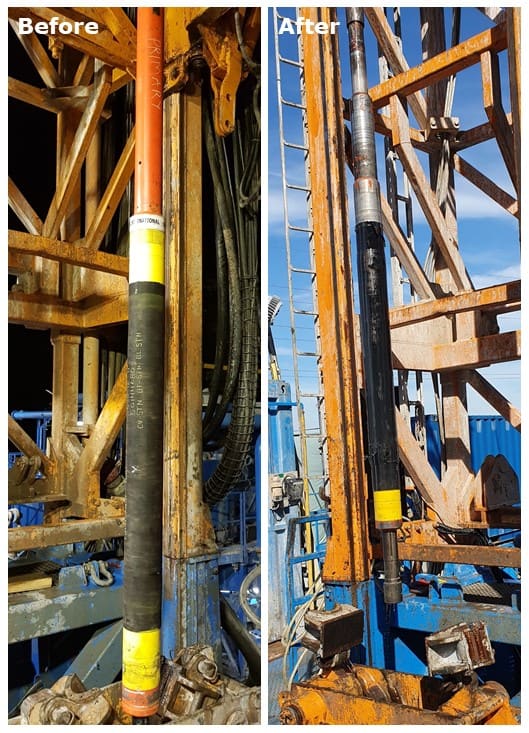
Pimp my downhole tool
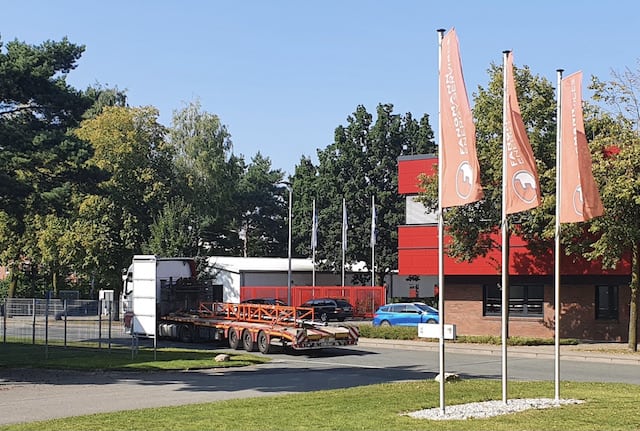
For the removal and replacement of defective tubular, Fangmann Energy Services customized a hydraulic liner hanger system. Here, an innovative hold-down slip design resulting into an unconventional reach was a mandatory requirement for our equipment. Our in-house construction team developed, build, and tested this top-of-the-class downhole tool. To the complete satisfaction of our customer, we already have performed the first field trial and await follow-up jobs in near future.
Green chemistry for sour gas wells
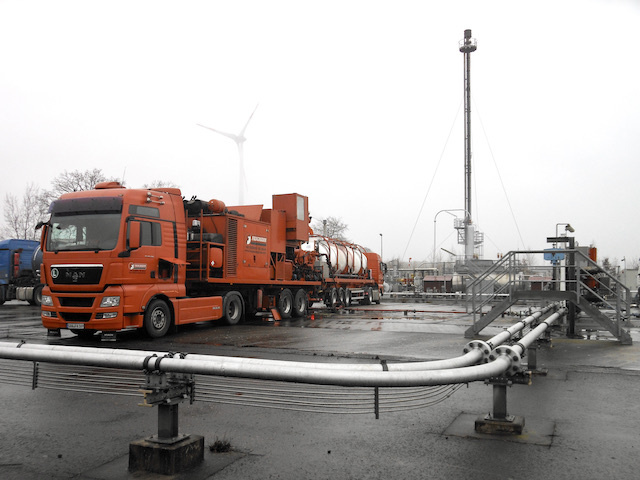
The well treated here produces sour gas with 14 mol% H2S and 9 mol% CO2 at a bottomhole temperature of 135°C. Therefore, the tubular consists of L-80 with some internals made of Incoloy 925 and alloy 28.
For the removal of residual scales in the tubing shoe section of this horizontal well, we used our biodegradable acid system SSB-007. Prior to the actual job, the extreme low corrosivity of SSB-007 was confirmed via intensive lab testing with an environmental-friendly corrosion inhibitor.
5 m3 of this state-of-the-art treatment fluid were pumped through tubing and displaced employing a booster unit with natural gas. According to our customer, the performance of this application was satisfactory, thus establishing SSB-007 to their standard system for acidizing sour gas wells.
For the removal of residual scales in the tubing shoe section of this horizontal well, we used our biodegradable acid system SSB-007. Prior to the actual job, the extreme low corrosivity of SSB-007 was confirmed via intensive lab testing with an environmental-friendly corrosion inhibitor.
5 m3 of this state-of-the-art treatment fluid were pumped through tubing and displaced employing a booster unit with natural gas. According to our customer, the performance of this application was satisfactory, thus establishing SSB-007 to their standard system for acidizing sour gas wells.
Long-term / high-rate injection test in Europe
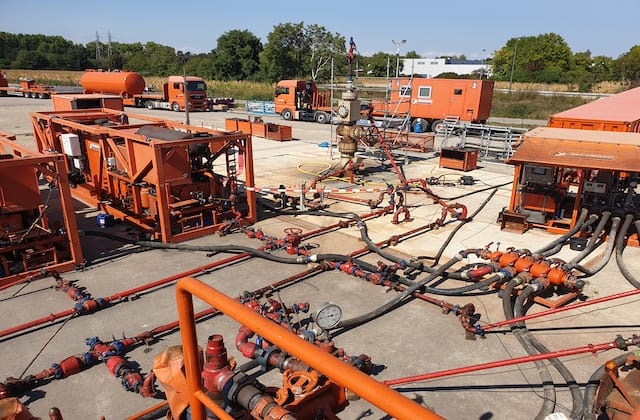
Fangmann is proud to perform another long-term / high-rate injection test in Europe.
The long-term / high-rate injection test was carried out without interruption in eight days with a high level of satisfaction of the client.
We are recognized and appreciated for our excellence in customized solutions, creativity and flexibility. Our skilled team and state-of-the-art technology are your key to long-term quality and the success of your projects.
The long-term / high-rate injection test was carried out without interruption in eight days with a high level of satisfaction of the client.
We are recognized and appreciated for our excellence in customized solutions, creativity and flexibility. Our skilled team and state-of-the-art technology are your key to long-term quality and the success of your projects.
Many challenges: ONE PARTNER
We proudly announce that our 7 5⁄8′′ x 9 5⁄8′′ LINER HANGER application was a complete success. Here, the vast experience of our DOWNHOLE TOOLS team was an essential factor for this positive outcome. In this context, we pumped a specially customized light-weight cement slurry at a density of 1.4 kg/L. Through many applications, this system has already been established for CEMENTING geothermal, as well as oil & gas wells.
For effective loss zone isolation, we additionally employed two 5 1⁄2′′ INFLATABLE PACKERS in the openhole section of the well. After finishing the job, the upper inflatable packer was successfully retrieved. The extremely short mobilization time was further testimony for our trademarks: FLEXIBILITY, RELIABILITY AND CUSTOMER ORIENTATION.
For effective loss zone isolation, we additionally employed two 5 1⁄2′′ INFLATABLE PACKERS in the openhole section of the well. After finishing the job, the upper inflatable packer was successfully retrieved. The extremely short mobilization time was further testimony for our trademarks: FLEXIBILITY, RELIABILITY AND CUSTOMER ORIENTATION.
1.20 SG HOZLITE SLURRY –Ideal for preventing glosses in weak formations
During cementing three oil wells in France, we encountered the challenge of low fracture gradient and consequently potential losses into the formation. For proper zonal isolation combined with strong mechanical properties, we successfully employed a 1.20 SG HOZlite slurry. For further information, please feel free to contact us directly.
High-density cement slurry for geothermal projects
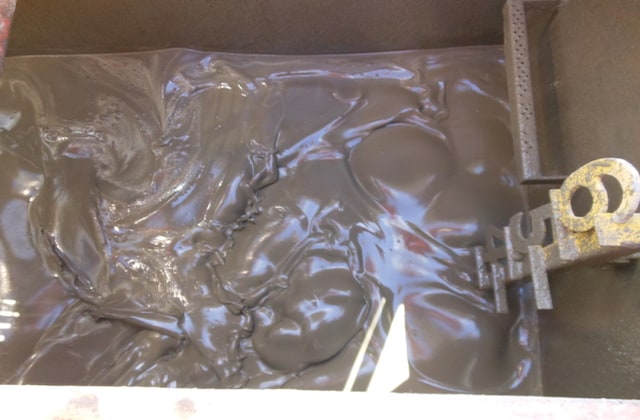
Fangmann Energy Services has successfully cemented a 7” liner employing its customized heavy weight slurry of 2.15kg/L –one of the highest densities pumped in Europe; if not the highest ever used for cementing a liner in a geothermal well. For more information, please feel free to contact us anytime.

Three-stage cementing operation for geothermal well
It is distinctly seldomthat geothermal energy clients call for specially customized solutionsto cement a string at shoe + top intervalonly. The reasonbehind wasto allow future testing and production from a formationlayer situated in between. To addressthischallenge, Fangmann Energy Servicesprovided an innovative casing hardware setting, comprising a TAM CAP and double-staged elements positioned at specific intervals. In thisway, employinga five-plugsequence, exact placement of the cement slurry was possible.

